You Won’t Believe What I Found Driving Through York’s Hidden Protected Lands
Driving through York, I stumbled upon something most tourists never see—the quiet beauty of its protected natural spaces. Away from the ancient streets and crowded landmarks, these areas are wild, peaceful, and absolutely stunning. I didn’t expect to find such raw nature just minutes from the city. This journey wasn’t planned—it unfolded mile by mile, turn by turn. What I discovered changed how I see travel in England forever. Let me take you through the real magic of York’s countryside, only possible by car.
Why Self-Driving Unlocks a Different Side of York
Renting a car in York transforms the travel experience from a checklist of historic sites to a journey of authentic discovery. While guided tours and public transport offer convenience, they also impose limits—fixed routes, rigid schedules, and curated stops that rarely venture beyond the well-trodden paths. When you drive yourself, the rhythm of exploration shifts. You’re no longer a passenger being delivered from one attraction to the next; you become the navigator of your own adventure, free to follow curiosity down narrow country lanes and pause wherever the landscape commands attention.
The decision to rent a car was not one I made lightly. Initially, I assumed that York’s compact center and reliable rail connections would be enough. After all, the city’s medieval walls, the Minster, and the Shambles are all within walking distance. But a conversation with a local at a café changed my mind. She mentioned how, just twenty minutes north of the city, the land opens into sweeping moorlands untouched by urban life. Her words sparked something—a longing to see more than postcard views, to experience the quiet pulse of rural Yorkshire. The next morning, I picked up a compact sedan from a reputable rental agency just outside the train station. The process was straightforward: valid license, credit card, a quick walk-around inspection, and within twenty minutes, I was on the road.
At first, I felt uneasy—was I overestimating my need for a car? But that doubt vanished as I left the city behind. The traffic thinned, the buildings gave way to hedgerows and grazing sheep, and the sky seemed to stretch wider. With every mile, the sense of possibility grew. There were no tour guides announcing points of interest, no bus stops dictating where I could or couldn’t go. Instead, I followed signs that caught my eye: “Footpath to Sutton Bank,” “Scenic Viewpoint Ahead,” “Public Access to Moorland.” These small detours led to moments of stillness and awe that no tour itinerary could replicate. The freedom to change plans on a whim—to stop for a photo, to hike a short trail, to sit on a stone wall and breathe in the air—was the true luxury of self-driving.
Most importantly, having a car allowed me to access protected natural areas that are difficult, if not impossible, to reach by public transport. These landscapes are not designed for mass tourism. They thrive on quiet visitation, on travelers who come with respect and leave no trace. Driving gave me the flexibility to explore them responsibly, arriving early to avoid crowds and departing before the light faded. It wasn’t just about convenience; it was about connection. The car became a bridge between the familiar and the wild, between the planned and the spontaneous.
The North York Moors: A Protected Landscape Like No Other
One of the most breathtaking revelations of my journey was the North York Moors National Park, a vast protected expanse stretching north of York. Established in 1952, this national park covers over 550 square miles of heather-clad moorland, ancient woodlands, and dramatic cliffs along the North Sea coast. What makes it truly special is its scale and solitude. Unlike more commercialized destinations, the Moors offer a sense of untouched wilderness, where the only sounds are the wind, the call of birds, and the distant bleat of sheep.
The transition from city to moorland is striking. Within half an hour of leaving York, the urban landscape dissolves into rolling hills painted in shades of purple and green. In late summer, the heather blooms in a vibrant purple haze that stretches to the horizon, creating a surreal, almost otherworldly effect. The air feels cleaner, crisper, carrying the earthy scent of damp soil and wild thyme. One of the first stops I made was at Sutton Bank, a steep escarpment known as the “Finest View in England.” A short walk from the car park leads to a panoramic overlook where, on a clear day, you can see across the Vale of York and into the distant hills. It’s a moment that stops you in your tracks—a reminder of how small we are in the face of nature’s grandeur.
Another remarkable site is the Hole of Horcum, a massive natural amphitheater formed by glacial erosion thousands of years ago. From the road, it looks like a giant bowl carved into the earth, surrounded by high ridges. Local legend says it was created by the devil digging for Scarborough, but geologists know it’s the result of Ice Age meltwater carving through soft rock. Whatever the origin, the effect is awe-inspiring. Standing at the edge, I felt a deep sense of time—of centuries passing, of landscapes shifting slowly but surely. These places are not just scenic; they are living records of Earth’s history.
The North York Moors are protected for good reason. They are home to rare species like the black grouse, the mountain hare, and the elusive otter. The park authority works closely with local farmers, conservationists, and volunteers to maintain the delicate balance between human use and ecological health. Controlled grazing, habitat restoration, and strict planning regulations help preserve the moorland’s integrity. As a visitor, I felt a responsibility to contribute to this effort. That meant staying on marked paths, keeping dogs on leads, and leaving no litter behind. Responsible tourism isn’t just a suggestion here—it’s essential to the survival of this unique environment.
Yorkshire Dales: Rolling Hills, Dry Stone Walls, and Hidden Valleys
From the wild openness of the Moors, my journey took me west into the Yorkshire Dales, another national park that showcases the quieter, greener side of Yorkshire’s countryside. While the Moors feel ancient and windswept, the Dales offer a more pastoral beauty—lush green valleys, meandering rivers, and centuries-old stone barns nestled among the hills. The contrast is striking, yet both landscapes share a deep sense of timelessness and care.
Driving through the Dales feels like moving through a living painting. The roads wind gently through valleys like Wharfedale and Wensleydale, flanked by dry stone walls that zigzag across the hillsides like stitches holding the land together. These walls, built without mortar by generations of farmers, are a testament to human patience and craftsmanship. Each curve and turn reveals a new scene: a herd of Belted Galloway cattle grazing in a meadow, a waterfall tumbling over limestone rock, or a village with a stone church and a single pub. There are no billboards, no chain stores—just the rhythm of rural life continuing at its own pace.
One of the joys of driving here is the ability to find quiet moments away from the main routes. While popular spots like Malham Cove attract crowds, a short detour down a narrow lane can lead to a secluded pull-off with a view of a hidden valley. I found one such spot near the village of Threshfield, where a small sign indicated a footpath into the hills. I parked carefully, ensuring I wasn’t blocking a gate or a farmer’s access, and took a twenty-minute walk along a well-marked trail. The path followed a stream, crossed a wooden footbridge, and opened onto a meadow where ponies grazed under a canopy of oak trees. There was no one else in sight. The only sounds were the water, the wind, and the distant call of a curlew.
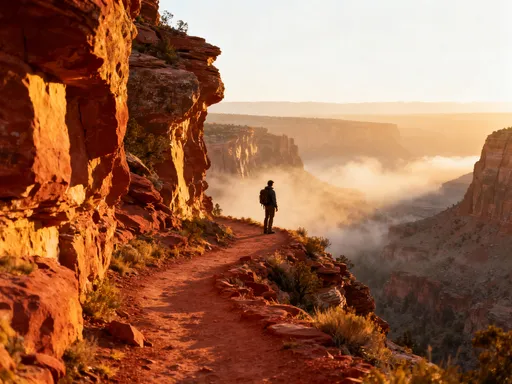
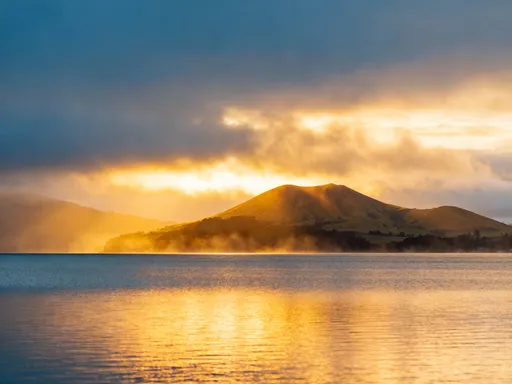
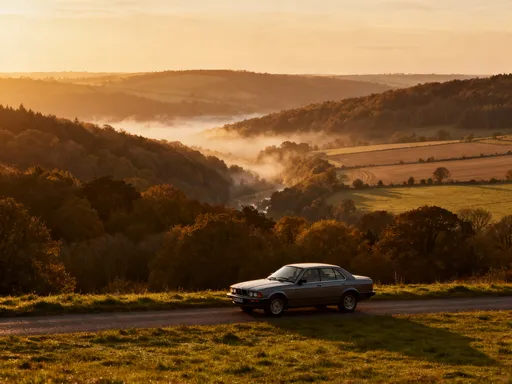
Timing is everything when visiting the Dales. I learned quickly that arriving early in the morning or later in the afternoon not only avoids the busiest times but also captures the landscape in its most magical light. At sunrise, the mist rises from the valleys like breath, and the hills glow in soft gold. At dusk, the shadows lengthen, and the stone buildings take on a warm, honeyed hue. These are the moments that stay with you—the quiet beauty of a place that doesn’t need crowds to prove its worth. Driving allows you to chase these moments, to be where the light is best, where the air is freshest, where the world feels most alive.
The Howardian Hills: York’s Quiet, Protected Backyard
Often overlooked in favor of more famous destinations, the Howardian Hills lie just southwest of York, forming a gentle arc of woodland, farmland, and quiet villages. Designated as an Area of Outstanding Natural Beauty in 1987, this region is one of England’s best-kept secrets. It lacks the dramatic peaks of the Dales or the vast moors of the north, but it offers something just as valuable: peace.
The drive into the Howardian Hills is a gradual descent into calm. The roads are narrow but well-maintained, lined with beech trees and hedgerows thick with hawthorn and wild roses. Villages like Coxwold and yearsley feel suspended in time, with stone cottages, village greens, and churches that date back to the medieval period. I stopped in Coxwold to visit a small tea room, where I was served scones with clotted cream and jam by a woman who had lived in the village for over sixty years. She spoke fondly of the changing seasons, of walks through the woods, of the way the light falls across the fields in autumn. Her pride in the place was palpable.
One of the most memorable moments of my trip came in the late afternoon, when I pulled over on a quiet lane near the edge of the hills. I turned off the engine, stepped out, and simply stood there. No traffic, no voices, no phone signal—just the rustle of leaves and the occasional song of a robin. I closed my eyes and listened. It was a rare kind of silence, the kind that doesn’t feel empty but full—full of presence, of life, of stillness. In that moment, I understood why protected landscapes matter. They are not just scenic backdrops; they are sanctuaries for the soul.
What makes the Howardian Hills so special is their accessibility and their tranquility. Because they are not as well-known as the Dales or the Moors, they attract fewer visitors. This means that even on a sunny weekend, you can find solitude. There are no entrance fees, no crowded car parks, no long queues. Just open roads, fresh air, and the freedom to explore at your own pace. For families, for solo travelers, for anyone seeking a gentle escape from the noise of daily life, the Howardian Hills offer a perfect retreat.
Practical Tips for Responsible Self-Driving in Protected Zones
Exploring York’s protected landscapes by car is a privilege, but it comes with responsibility. These areas are fragile, shaped by centuries of natural processes and careful stewardship. To ensure they remain beautiful and accessible for future generations, visitors must follow a few essential guidelines. The first and most important is to park only in designated areas. Many scenic spots have small car parks or lay-bys clearly marked for visitors. Never block gates, farm entrances, or narrow roads. If a car park is full, do not park on the grass or along the edge of the road—return at a different time or choose another location.
Staying on marked roads and paths is equally important. While it may be tempting to drive down a dirt track or park near a stunning viewpoint, off-road driving is illegal in protected areas and can damage sensitive habitats. Stick to public roads and use footpaths for walking. Always close gates behind you, especially in farming areas, and keep dogs on leads to protect livestock and wildlife. These small actions show respect for the land and the people who live and work there.
Another key practice is minimizing waste. Bring reusable water bottles, pack out all trash, and avoid single-use plastics. Many villages have recycling bins, but it’s best to take your waste with you if you’re unsure. Carry a small bag for litter—sometimes you’ll find debris left by others, and picking it up, even a little, makes a difference. Hydration and snacks are important, but choose items with minimal packaging and dispose of everything properly.
Before setting out, check local signage and visit National Park visitor centers for updates on trail conditions, wildlife activity, and seasonal restrictions. These centers are staffed by knowledgeable rangers who can offer advice on the best routes, current weather, and conservation efforts. They also provide maps and brochures that highlight lesser-known spots, helping you avoid overcrowded areas. Planning ahead not only enhances your experience but also reduces your impact on the environment.
Finally, consider the timing of your visits. Arriving early in the morning or later in the day not only offers better light for photos but also helps distribute visitor numbers more evenly. Popular spots like Sutton Bank or Malham Cove can become congested by mid-morning. By going early, you’ll enjoy greater solitude, fewer cars, and a deeper connection to the landscape. Slow travel—taking your time, pausing often, being present—is the most rewarding way to explore these protected lands.
Unexpected Encounters: Wildlife, Weather, and Local Culture
Some of the most memorable moments of my journey were unplanned. One morning, as I drove along a quiet road near the edge of the North York Moors, I spotted a small herd of roe deer at the edge of a woodland. They stood perfectly still, ears alert, watching the car with quiet curiosity. I stopped slowly, turned off the engine, and waited. For nearly five minutes, we shared the same space, separated only by glass and silence. It was a humbling reminder that these lands belong to more than just humans—they are home to a rich web of life that thrives when left undisturbed.
Another day, I heard the haunting call of a curlew echoing across the moor. The sound, both mournful and beautiful, carried for miles. I later learned that curlews are one of the UK’s most threatened bird species, their numbers declining due to habitat loss. Hearing one in the wild felt like a gift—a reminder of why conservation matters. These encounters, fleeting as they were, deepened my connection to the landscape in ways I hadn’t expected.
The weather in Yorkshire is famously changeable, and I quickly learned to prepare for all conditions. One moment, the sun would shine brilliantly; the next, a thick mist would roll in, reducing visibility to just a few yards. I began packing layers every day—waterproof jacket, warm sweater, sturdy shoes—no matter what the forecast said. Being prepared didn’t just keep me comfortable; it allowed me to stay out longer, to wait for the mist to clear or the rain to pass. There’s a special kind of beauty in a mist-covered valley, in the way the light filters through the clouds.
I also had the pleasure of meeting locals who shared their love for the region. In a small village shop, a farmer thanked me for parking considerately and offered advice on a nearby walking path. At a country pub, an elderly man told stories of how the land had changed over the decades. These brief interactions added warmth and depth to the journey, reminding me that these landscapes are not just scenic wonders but living communities shaped by generations of care.
Why Protected Areas Are Worth the Drive—And the Effort
Driving through York’s hidden protected lands was more than a sightseeing trip—it was a journey of renewal. The emotional rewards of these landscapes are profound. In a world that often feels rushed and noisy, places like the North York Moors, the Yorkshire Dales, and the Howardian Hills offer a rare chance to slow down, to breathe deeply, to remember what it feels like to be still. The sensory experience—the smell of damp earth, the sound of wind in the grass, the sight of sunlight on a river—is both grounding and uplifting.
These protected areas are not just beautiful; they are vital. They support biodiversity, protect watersheds, and provide spaces for mental and physical well-being. Studies have shown that time spent in nature reduces stress, improves mood, and enhances creativity. For families, for individuals, for anyone seeking balance, these landscapes offer a natural remedy. But their value extends beyond personal benefit. They represent a commitment to conservation, to preserving the best of England’s natural heritage for future generations.
I encourage every traveler to go beyond York’s famous walls and explore its wild surroundings. Rent a car, plan a route, and allow yourself to get a little lost. Follow the quiet roads, stop often, and let the landscape speak to you. Visit responsibly—park legally, respect the land, support local communities. These places thrive not on mass tourism but on thoughtful, mindful visitation.
As my journey ended, I found myself back in a quiet valley in the Dales, the engine off, the world silent. The sun dipped below the hills, painting the sky in shades of amber and rose. A fox darted across the field, and a pair of owls began their evening call. In that moment, I felt a deep sense of gratitude—for the beauty I had seen, for the peace I had found, for the reminder that wonder is still possible, just a drive away. The real magic of York isn’t only in its history. It’s in the wild, quiet spaces that surround it, waiting to be discovered at your own pace.