You Won’t Believe What Hidden Art I Found in Zermatt
Tucked beneath the shadow of the mighty Matterhorn, Zermatt isn’t just about alpine views and ski trails—there’s a quiet, creative soul here waiting to be discovered. I went not to rush through landmarks, but to slow down, breathe, and let the village reveal itself. What I found? Intimate galleries carved into old chalets, open studios where artists paint with mountain light, and public sculptures that blend seamlessly with nature. This is slow travel at its finest—where art isn’t displayed, it’s lived.
The Rhythm of Slow Travel in a Car-Free Village
Zermatt’s defining feature—its complete absence of cars—sets the tone for a journey unlike any other. From the moment visitors step off the train at the edge of town, they enter a world where silence replaces engine noise, and the rhythm of life slows to match the pace of footfall on cobbled lanes. Electric service vehicles glide past quietly, but the dominant sounds are the distant chime of cowbells, the rustle of pine needles in the wind, and the occasional call of a bird overhead. This sensory shift is not merely charming; it is transformative. Without the distraction of traffic, the mind becomes more receptive, more attuned to subtle details—the curve of a wooden eave, the texture of weathered stone, the way light filters through snow-dusted branches. This environment naturally encourages mindfulness, making Zermatt an ideal setting for travelers seeking depth over speed.
The car-free policy, in place for decades, was originally designed to preserve air quality and maintain the village’s alpine character. But it has had an unintended artistic benefit: it fosters a culture of presence. When you walk everywhere—whether to a café, a gallery, or a mountain trail—you are not just moving from point A to point B; you are experiencing the journey. Each step becomes part of the story. This deliberate pace allows travelers to notice what might otherwise be missed: a hand-painted sign above a boutique, a floral arrangement in a window, or the way smoke curls from a stone chimney into the crisp air. These small moments accumulate into a deeper understanding of place, one that goes beyond postcard views.
Moreover, the absence of vehicles enhances accessibility to artistic experiences. Without traffic barriers or noise pollution, public art installations feel more integrated into the landscape. A sculpture tucked beside a footpath isn’t drowned out by honking or exhaust fumes; it can be approached, circled, and contemplated in peace. Walking also encourages serendipity. A planned visit to one gallery might lead to an unplanned discovery—a hidden courtyard with a mural, or a street musician playing a traditional alpine tune on the alphorn. These encounters, born of unhurried exploration, often leave the most lasting impressions. In a world where tourism is increasingly fast-paced and checklist-driven, Zermatt offers a rare alternative: the chance to travel with intention, awareness, and openness to beauty in its quietest forms.
Galleries That Feel Like Home: Intimate Art Spaces Off the Beaten Path
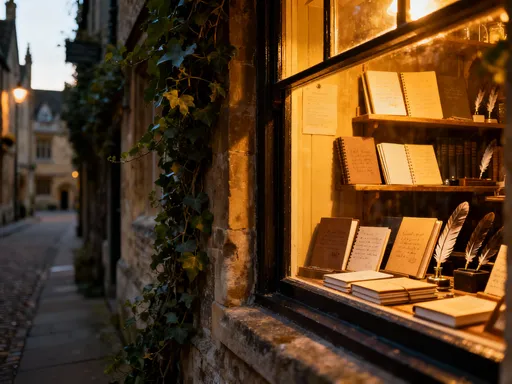
While Zermatt is known for its outdoor adventures, its artistic heartbeat pulses strongest in small, unassuming spaces that defy the grandeur of traditional museums. These are not sterile, white-walled institutions but living rooms of creativity—galleries housed in centuries-old chalets with creaking floorboards, sloped ceilings, and the lingering scent of woodsmoke. One of the most notable is Kunsthalle Zermatt, a contemporary art space that occupies a renovated historic building near the main promenade. Unlike large urban galleries, Kunsthalle maintains an intimate scale, often showcasing solo exhibitions by Swiss and international artists whose work responds to alpine themes—glaciers, isolation, light, and silence. The curation is thoughtful, never overwhelming, allowing each piece room to breathe and resonate.
What sets these galleries apart is their human touch. Visitors might find handwritten notes next to artworks, explaining the inspiration behind a painting or the technique used in a sculpture. In some cases, the artist is present—sipping tea in the corner, ready to discuss their process without pretense. This accessibility breaks down the usual barriers between creator and observer, transforming viewing into conversation. There’s no need to whisper or fear touching the walls; instead, the atmosphere is welcoming, almost familial. You might overhear a local couple debating the meaning of an abstract piece, or a child asking why a sculpture is shaped like a snowdrift. These moments of shared engagement reflect the community’s genuine connection to art, not as a commodity but as a part of daily life.
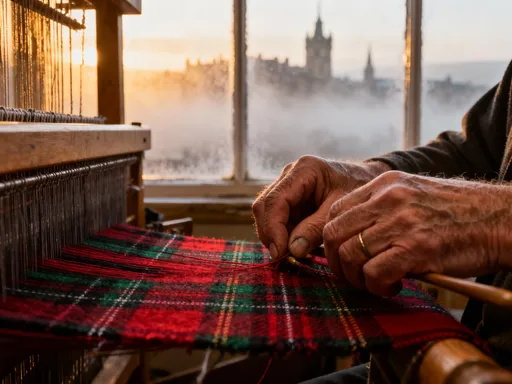
Beyond Kunsthalle, Zermatt is dotted with temporary pop-up exhibitions and artist cooperatives that emerge during the shoulder seasons. These spaces often occupy vacant shops or unused storage rooms, transformed for a few weeks into vibrant showcases of local talent. One such example is a former dairy storage room turned gallery, where black-and-white photographs of vanishing alpine glaciers were displayed alongside woven textiles made from recycled wool. The impermanence of these venues adds to their charm—they feel like secrets shared among friends, not attractions marketed to mass tourism. By supporting these grassroots initiatives, travelers contribute directly to the local creative economy, ensuring that art in Zermatt remains authentic, evolving, and deeply rooted in place.
When Nature Becomes the Canvas: Outdoor Installations and Sculpture Trails
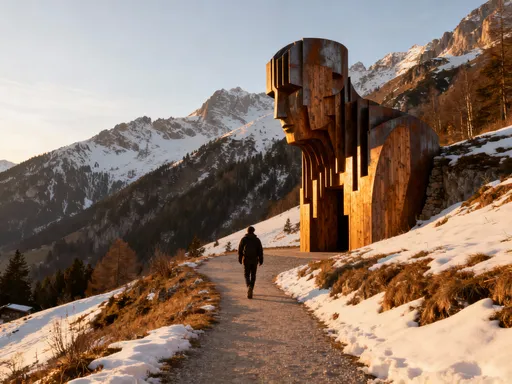
In Zermatt, the boundary between art and environment blurs in the most poetic ways. The mountains are not just a backdrop; they are active participants in the artistic experience. The Zermatt Summit Art trail, launched as a seasonal initiative, invites visitors to follow a curated path through alpine meadows and forested slopes, where site-specific installations respond directly to their surroundings. These works are not placed *in* nature—they are born *from* it. A steel sculpture might echo the jagged profile of the Matterhorn, its polished surface reflecting shifting clouds. A wooden spiral could mimic the growth pattern of a pinecone, half-buried in moss as if emerging from the earth itself. Each piece is designed to change with the seasons, appearing differently under snow, rain, or golden autumn light.
One particularly striking installation, located near the Gornergrat railway station, consists of a series of vertical glass panels etched with topographical lines of the surrounding peaks. When viewed head-on, the lines merge into a three-dimensional image of the mountain range. As you walk past, the perspective shifts, and the image dissolves—only to reappear from another angle. This interplay of perception and movement mirrors the way travelers experience the landscape itself: never fully graspable from a single viewpoint, always revealing new layers. The artwork doesn’t demand attention; it waits, quietly, for the curious to approach and engage.
These outdoor works are intentionally low-impact, using materials that weather naturally or blend into the terrain. Some are temporary, existing for only a few months before being removed or allowed to decompose. This ephemerality reinforces a central theme in Zermatt’s artistic philosophy: that beauty is fleeting, and presence is everything. Unlike permanent monuments, these installations invite a different kind of relationship—one based on impermanence, mindfulness, and respect. Visitors are encouraged not to touch, but to observe, reflect, and move on, leaving no trace. The experience is less about ownership and more about momentary connection—a shared breath between viewer, artwork, and mountain.
Artist Studios You Can Actually Visit: Creativity in Plain Sight
One of the most rewarding aspects of art-centered travel in Zermatt is the rare opportunity to step inside working artist studios—spaces where creativity unfolds in real time. Unlike in many tourist destinations where artists are hidden behind gallery walls, here, painters, ceramicists, and woodcarvers often open their doors during the summer and early autumn months, inviting visitors to witness the creative process firsthand. These studios are not performances; they are genuine workplaces, filled with the tools of the trade—palettes crusted with dried paint, shelves lined with clay test pieces, shavings scattered across the floor from a recent carving.
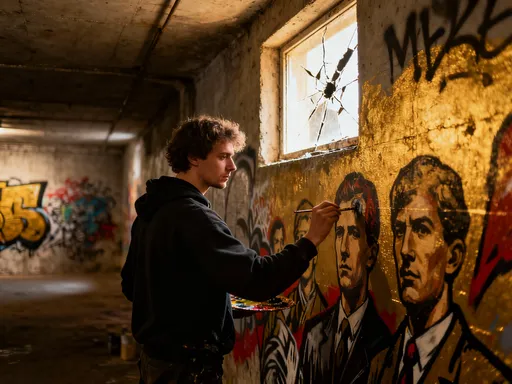
At a small atelier tucked behind the church square, I watched a painter mix pigments using mineral powders collected from local rock formations. Her palette included shades of iron red, glacial gray, and snow-melt blue—colors drawn directly from the landscape. As she layered them onto a canvas depicting a storm over the Matterhorn, she explained how the changing light at different elevations affects color perception. “At 3,000 meters,” she said, “the sky isn’t just blue—it’s electric, almost metallic. You have to paint it differently.” This deep connection between environment and expression is common among Zermatt’s artists, whose work is not inspired by the mountains in a general sense, but rooted in daily observation and physical experience.
Another studio, housed in a former goat barn, specializes in wood sculpture. The artist, a third-generation carver, uses Swiss stone pine—a fragrant, durable wood traditionally used in chalet construction. His latest piece, a twisting form resembling a gust of wind caught in solid form, was inspired by the way snow drifts accumulate on lee sides of buildings. He works without blueprints, allowing the grain and knots of the wood to guide his chisel. Visitors are welcome to ask questions, and many leave with a deeper appreciation for the patience and intuition required in such craftsmanship. These encounters are not transactional; they are exchanges of stories, perspectives, and respect. In a world increasingly dominated by mass-produced souvenirs, the chance to meet the maker—to see the hands that shaped the art—is profoundly meaningful.
How to Experience Art Like a Local: Timing, Routes, and Mindset
To truly connect with Zermatt’s artistic spirit, timing and approach matter as much as destination. The best moments often come during the shoulder seasons—late spring (May to early June) and early autumn (September to October)—when the summer crowds have thinned, the weather remains mild, and many studios and pop-up galleries are still open. These periods offer a more authentic rhythm, closer to the life of residents than the peak-season rush of skiers and hikers. Starting early in the morning enhances the experience; the village is quiet, the light soft, and the air crisp—ideal conditions for reflection and observation.
A recommended route begins at the Zermatt railway station, where travelers can pick up a free art trail map from the tourist office. From there, a gentle walk along Bahnhofstrasse leads to Kunsthalle Zermatt, followed by a climb up Kirchstrasse to smaller galleries and craft shops. Continuing toward the church, visitors can detour to the weekly artist market (held on Fridays from June to September), where local creators sell paintings, jewelry, and textiles. The path then winds uphill to the beginning of the Zermatt Summit Art trail, accessible via the Gornergrat railway or a two-hour hike. Along the way, benches are placed at key viewpoints—not just for rest, but for contemplation.
Equally important is mindset. To experience art like a local is to shed the tourist’s checklist mentality. Instead of rushing to “see everything,” travelers are encouraged to slow down, return to the same spot at different times of day, or spend ten minutes simply sitting with a single artwork. Carrying a small notebook can help capture impressions—sketches, quotes, or sensory details like the smell of linseed oil in a studio. Silence, too, is a tool; many of Zermatt’s most powerful artistic moments occur in quiet spaces, where the absence of noise allows inner reflection. By approaching art not as a series of sights to be conquered, but as a practice of presence, travelers open themselves to deeper emotional and intellectual rewards.
Beyond the Frame: Art in Unexpected Corners
In Zermatt, art is not confined to galleries or marked trails—it spills into the everyday. Turn a corner down a narrow alley, and you might find a vibrant mural painted on the side of a barn, depicting a historic cattle drive or a mythic alpine spirit. Stop at a mountain hut for lunch, and the hand-stitched tablecloths, carved wooden spoons, and hand-thrown ceramic mugs all reflect generations of craft tradition. Even the menus are designed with care—printed on recycled paper with illustrations of local flora, listing dishes named after nearby peaks or glaciers. These details are not mere decoration; they are expressions of identity, continuity, and pride.
Architecture itself becomes a canvas. Traditional chalets feature intricate woodcarvings around windows and eaves—floral patterns, geometric motifs, or stylized animals. Some homes display small sculptures in their gardens: a stone ibex, a metal whirlwind, a woven willow figure. These private expressions of creativity are not for sale or public acclaim; they exist simply because they bring joy to the makers and passersby alike. Hotels, too, integrate art into their design. A boutique inn might feature guest rooms named after local artists, each furnished with original works or textiles inspired by alpine patterns. The lobby could host a rotating exhibition, free for guests and visitors to enjoy over coffee or tea.
These everyday artistic touches reinforce a central truth: in Zermatt, culture is lived, not performed. There is no separation between “art” and “life.” A woman knitting in a café uses yarn dyed with natural pigments; a baker arranges bread on a hand-carved wooden board; a child draws in the dust with a stick. These acts, small and unremarkable, are part of a broader creative ecosystem. For the attentive traveler, they become as meaningful as any gallery masterpiece. By learning to see art in the ordinary—the curve of a roof, the pattern of a fence, the color of a door—visitors begin to perceive Zermatt not as a destination, but as a state of mind.
Why This Kind of Travel Stays With You
Travel that centers on art and slowness leaves a different kind of imprint—one that lingers in the heart and mind long after the journey ends. Unlike the fleeting satisfaction of ticking off landmarks, the experience of Zermatt’s hidden art fosters a deeper emotional resonance. It invites introspection, awakens the senses, and nurtures a sense of connection—to place, to people, to the quiet beauty of the world. Many who visit return home not with souvenirs, but with a renewed awareness of how creativity can be woven into daily life, even in the most unexpected places.
This kind of travel transforms the way we see. It teaches us to look closer, to pause, to appreciate the subtle over the spectacular. In a culture that often equates value with speed and volume, Zermatt offers a counter-narrative: that the most meaningful experiences are often the quietest, the most personal, the least advertised. The memory of watching an artist mix paint from mountain soil, or of standing before a sculpture that changes with the light, becomes a touchstone—a reminder that beauty exists in patience, in presence, in participation.
Ultimately, Zermatt challenges the very definition of what a journey can be. It is not about escape, but about engagement. Not about consumption, but about connection. For women between 30 and 55—often balancing family, work, and personal aspirations—this kind of travel offers something rare: space to breathe, to reflect, to rediscover creativity not as a hobby, but as a way of being. The art of Zermatt does not shout; it whispers. And in that whisper, there is transformation. So the next time you plan a trip, consider not just where you’ll go, but how you’ll move through it. Seek the quiet corners. Knock on the studio door. Let the mountains teach you how to see. Because sometimes, the most unforgettable art is the one you never knew you were searching for.