How I Found Balance with Qigong as a Total Beginner
When I first started my wellness journey, I felt overwhelmed and stiff—mentally and physically. I’d tried quick fixes that didn’t last. Then I discovered qigong, a gentle practice rooted in traditional Chinese medicine. As a beginner with no experience, I was surprised by how just a few minutes a day brought noticeable calm and mobility. This is my story of building a simple, sustainable qigong-based rehabilitation routine that truly worked for me. It wasn’t about dramatic transformation or overnight results, but about consistent, mindful movement that supported my body and mind in ways I hadn’t expected. Over time, what began as an experiment became a cornerstone of my daily well-being.
The Breaking Point: Why I Needed a New Approach
For years, I managed my health with conventional strategies—over-the-counter pain relief, stretching when I remembered, and occasional walks when energy allowed. But by my early 40s, the cumulative effect of long workdays, emotional stress, and physical inactivity began to show. I experienced persistent stiffness in my shoulders and lower back, frequent headaches, and a sense of mental fatigue that made even small decisions feel exhausting. Sleep became restless, and mornings were often met with a body that felt heavier than the day before. I wasn’t critically ill, but I wasn’t thriving either—just getting by.
Seeking solutions, I turned to physical therapy and tried various forms of exercise, including yoga and strength training. While these offered temporary relief, they often left me sore or frustrated. The routines felt too intense, too structured, or too difficult to maintain when my energy fluctuated. I needed something that could adapt to my changing condition, not demand more from me than I could give. That’s when a friend mentioned qigong—not as a cure, but as a way to reconnect with the body gently and consistently.
At first, I was skeptical. The idea of “energy flow” and “ancient practices” sounded vague, even a little mystical. I worried it might be another trend with more promise than proof. But what drew me in was its accessibility: no special equipment, no fitness level required, and no pressure to perform. I decided to approach it not as a miracle solution, but as an experiment—one that asked only for a few quiet minutes each day. That small shift in mindset made all the difference.
Qigong Unpacked: More Than Just Movement
Qigong, pronounced “chee-gong,” is a mind-body practice with roots in traditional Chinese medicine that has been used for centuries to support health and vitality. At its core, it combines three elements: slow, intentional movement; coordinated breathing; and focused awareness. Unlike high-intensity workouts that challenge the body through resistance or speed, qigong works by encouraging balance, circulation, and internal awareness. It’s less about how much you do and more about how you do it—with presence, patience, and care.
The word “qigong” itself comes from two concepts: “qi,” which refers to vital life energy, and “gong,” meaning cultivation or practice. In traditional Chinese medicine, health is seen as a state of smooth, unobstructed flow of qi throughout the body. When this flow is disrupted—due to stress, injury, or inactivity—discomfort or imbalance can arise. Qigong aims to restore that balance by using gentle motions and breath to stimulate circulation, calm the nervous system, and improve body-mind coordination.
Scientific research has increasingly supported aspects of qigong’s benefits. Studies have shown that regular practice can help reduce symptoms of chronic pain, improve balance and flexibility, and lower stress hormones like cortisol. It’s also been associated with better sleep quality and improved mood, likely due to its calming effect on the autonomic nervous system. While it doesn’t replace medical treatment, it serves as a complementary practice that empowers individuals to take an active role in their recovery and daily wellness.
What sets qigong apart from other movement practices is its emphasis on softness and intention. Movements are small, repetitive, and never forced. There’s no goal of perfection or performance. Instead, the focus is on feeling—on noticing the subtle shifts in weight, temperature, and tension as you move. This quality of attention helps rebuild the connection between mind and body, which can weaken over time due to stress or disuse. For someone in rehabilitation, this mindful awareness is not just comforting—it’s therapeutic.
Starting Small: My First Week as a Beginner
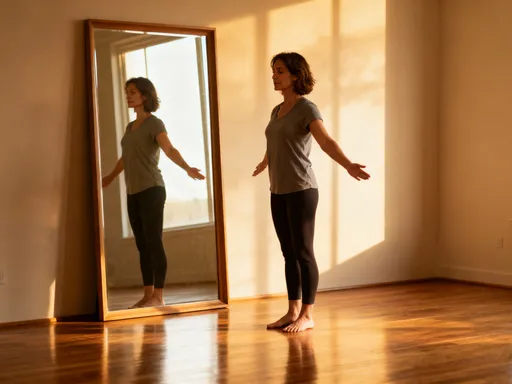
Determined to begin without pressure, I committed to just five minutes a day. I found a beginner-friendly qigong video online, one that guided me through two simple exercises: standing meditation and arm waves. The standing meditation involved standing with feet shoulder-width apart, knees slightly bent, arms relaxed at my sides, and attention on my breath. The instruction was to “sink into the feet” and imagine roots growing into the ground. At first, it felt underwhelming—just standing still. But within a few minutes, I noticed my breathing deepened, and the usual mental chatter began to quiet.
The arm waves were equally simple: raising the arms slowly in front of the body, then sweeping them out to the sides and down, like brushing water aside. The movement was slow, continuous, and synchronized with the breath—inhaling as the arms rose, exhaling as they lowered. I remember feeling self-conscious at first, wondering if I looked silly. But as I focused on the rhythm, that concern faded. Instead, I began to notice physical sensations: a slight tremor in my arms, warmth spreading through my shoulders, and a tingling in my fingertips. These weren’t uncomfortable—just new, like my body was waking up after a long stillness.
By the end of the week, I didn’t feel dramatically different, but there were subtle shifts. I was slightly less reactive to small stressors—like a delayed grocery order or a missed call from a family member. I also noticed that my morning stiffness seemed a bit less intense. I wasn’t leaping out of bed with energy, but the transition from lying down to standing felt smoother. Most importantly, I hadn’t missed a single day. The brevity of the practice made it easy to honor, even on busy or low-energy days. That consistency, small as it was, built a quiet confidence that I could stick with this.
Building a Routine That Sticks: The First 21 Days
After the first week, I decided to extend my practice to ten minutes. I added a new movement: the “lifting the sky” exercise, where the hands rise from the lower abdomen to above the head, then slowly lower back down. This motion engaged the entire body, encouraging spinal extension and deep breathing. I practiced in the morning, just after waking, in a quiet corner of my living room. I wore comfortable clothes and stood on a yoga mat, though I later learned that even practicing in socks on a carpeted floor was perfectly fine.
To stay consistent, I used a few simple tools. I set a daily reminder on my phone and kept a small journal where I noted how I felt before and after each session. I didn’t write long entries—just a few words like “tense” or “calm,” “stiff” or “loose.” Over time, this record helped me see patterns. I noticed that on days I practiced, I was more likely to feel centered by midday. I also found that even on days when I felt too tired, doing just three minutes was better than skipping entirely. This flexibility prevented the all-or-nothing thinking that had derailed past wellness attempts.
Like any new habit, there were challenges. Some days, impatience crept in. I’d think, “Is this really doing anything?” or “I should be feeling better by now.” Other days, I’d forget or delay my practice until evening, only to feel too wound up to move slowly. What helped was reminding myself that qigong isn’t about immediate results—it’s about showing up. I also found comfort in knowing that millions of people around the world practice qigong not for dramatic change, but for daily balance. Watching free instructional videos from certified instructors gave me confidence that I was learning correctly, without financial pressure.
By the end of the third week, my body had begun to anticipate the practice. I no longer had to force myself to start. Instead, there was a quiet pull toward that few minutes of stillness and motion. My posture had improved slightly—my shoulders were less hunched, and I caught myself standing taller throughout the day. The routine wasn’t perfect, but it was becoming part of my rhythm, like brushing my teeth or making coffee. That integration—making qigong a natural part of daily life—was perhaps the most important milestone.
Noticing the Shifts: Physical and Mental Changes Over Time
After two months of regular practice, the changes became more apparent. My joint discomfort, especially in the neck and lower back, had decreased significantly. I wasn’t pain-free, but the sharp, persistent aches had softened into occasional twinges that resolved quickly. I also noticed improved range of motion—reaching for a high shelf or bending to tie a shoe felt less effortful. These weren’t dramatic breakthroughs, but they added up in meaningful ways, making daily tasks easier and more comfortable.
Sleep quality improved as well. I fell asleep more easily and stayed asleep longer. I attributed this to the calming effect of the evening practice I had added—just five minutes of gentle swaying and deep breathing before bed. My mind, which used to race with to-do lists and unresolved worries, began to settle more naturally. I also experienced less mental fog during the day. Tasks that once required intense focus, like managing household budgets or helping children with schoolwork, felt more manageable. I wasn’t suddenly sharper, but my thinking felt clearer, like a window had been wiped clean.
Emotionally, I felt more resilient. Stressful moments still arose, but my reaction to them had shifted. Where I once might have responded with frustration or withdrawal, I now paused—taking a breath, grounding myself, and choosing a calmer response. This emotional regulation didn’t come from willpower alone, but from the cumulative effect of daily practice. Each session reinforced a sense of inner stability, like building a quiet space within that couldn’t be easily disturbed. I began to see qigong not just as exercise, but as a form of self-care that nurtured both body and mind.
Tailoring Qigong to Support Recovery Needs
As my practice deepened, I began to explore different qigong forms that addressed specific needs. For flexibility and joint mobility, I incorporated the “shaking” exercise, a gentle full-body vibration that loosens connective tissue and improves circulation. For nervous system regulation, I practiced “microcosmic orbit” breathing, a seated technique that guides attention along a subtle energy pathway. These weren’t random choices—they were selected based on guidance from reputable qigong instructors and alignment with my recovery goals.
I also learned to integrate qigong into daily life beyond formal sessions. While preparing breakfast, I’d stand mindfully, feeling my feet on the floor. During a work break, I’d do a few slow arm raises at my desk. These micro-practices, lasting just a minute or two, helped maintain the sense of presence and alignment cultivated during longer sessions. I found that consistency mattered more than duration—frequent, brief moments of awareness added up over time.
Throughout this journey, I remained in communication with my healthcare provider, especially since I was managing chronic discomfort alongside other treatments. I made it clear that qigong was not a replacement for medical care, but a supportive practice. My doctor appreciated that I was taking proactive steps within safe boundaries. This collaborative approach ensured that my qigong practice complemented, rather than conflicted with, other aspects of my health plan. It also reinforced the importance of listening to my body—resting when needed, modifying movements, and avoiding strain.
Sustaining Practice: From Rehab Plan to Lifelong Habit
Today, qigong is no longer just a rehabilitation tool—it’s a lifelong habit. My routine has evolved: some days I practice for five minutes, others for twenty. I’ve learned new forms, attended online classes, and even shared simple movements with friends. But the core remains the same: gentle, intentional movement paired with breath and awareness. What began as a response to physical discomfort has become a daily act of self-respect and balance.
The journey taught me the value of patience and self-compassion. Healing isn’t linear, and progress isn’t always visible. Some days, my body feels stiff again; other days, my mind is restless. But showing up—without judgment, without expectation—has made all the difference. Qigong hasn’t erased life’s challenges, but it has given me a way to meet them with greater calm and resilience.
To anyone considering qigong, especially as a beginner, I offer this: start small, stay consistent, and be kind to yourself. You don’t need special skills, a perfect body, or hours of time. You only need a few quiet minutes and a willingness to listen. It’s not a cure, but it is a powerful tool—one that can support your well-being in quiet, lasting ways. In a world that often demands more and more, qigong reminds us that sometimes, the gentlest movements create the deepest change.